
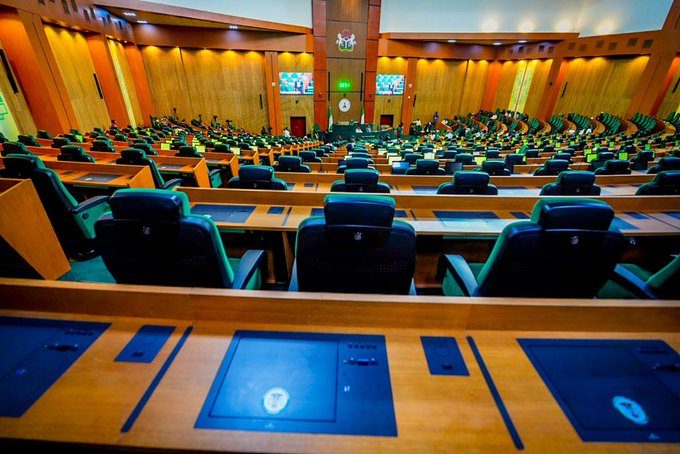
ABUJA, NIGERIA — In a historic and monumental shift for Nigeria’s internal security architecture, the House of Representatives on Thursday passed a landmark constitutional amendment bill to establish state police nationwide.
The sweeping reform, which aims to decentralize the country’s heavily centralized policing system, was passed with overwhelming bipartisan support. However, to ensure maximum focus on the escalating security crisis, the House has deferred voting on several other proposed constitutional alterations to a future legislative session.
A Landslide Vote for Decentralized Security
The legislation, formally titled "A Bill for an Act to Alter the Constitution of the Federal Republic of Nigeria, 1999 to Provide for the Establishment of State Police and for Related Matters (Sixth Alteration) Bill, 2026," was pushed through during a highly charged plenary session presided over by the Speaker of the House, Rt. Hon. Tajudeen Abbas.
Following a presentation of the constitutional review report by the Deputy Speaker and Chairman of the House Committee on Constitution Review, Hon. Benjamin Kalu, lawmakers proceeded to a manual vote.
The result was a resounding endorsement for localized law enforcement:
-
Votes in Favor: 289
-
Abstentions: 1
-
Votes Against: 0
The unanimous backing underscores a growing national consensus among the political class that the current single, federal police structure is no longer capable of effectively combating Nigeria's complex security challenges, which include banditry, terrorism, and kidnapping.
Restructuring Section 214
The newly passed bill fundamentally alters Section 214 of the 1999 Constitution, explicitly splitting the nation's policing framework into two distinct tiers: Federal Police and State Police.
Under the provisions of the new amendment:
-
The National Assembly will retain the power to framework the administration, structure, and minimum standards of operations for both tiers.
-
State Houses of Assembly are empowered to enact laws to establish their independent state police formations.
-
No state police unit can legally begin operations until it is certified by federal regulatory standards to prevent political victimization and abuse.
"The structure has been agreed to... national consensus has arisen, the executive has bought into it, and the Governors have bought into it," Deputy Speaker Benjamin Kalu stated ahead of the vote, calling the moment an emergency intervention to improve emergency response times across the federation.
Other Amendments Shelved for Later
While the final print of the Constitution Alteration Bills originally spanned critical thematic areas—including local government autonomy, judicial reforms, fiscal federalism, and electoral restructuring—the House leadership took the strategic decision to prioritize security.
All other non-security-related constitutional amendments have been deferred to a subsequent legislative session. Lawmakers noted that unbundling the security apparatus required immediate, undivided legislative focus, leaving other highly debated governance reforms for a later date.
What Happens Next?
The passage of the bill by the House of Representatives is a massive milestone, but it is only the first major hurdle. For the amendment to become law and be integrated into the 1999 Constitution, it must now:
-
Secure a concurrent passage by the Senate.
-
Receive approval from at least two-thirds of the 36 State Houses of Assembly (24 states).
-
Be signed into law by President Bola Ahmed Tinubu.
Given that the Nigeria Governors' Forum (NGF) has previously voiced strong support for state policing, political analysts anticipate a smooth transition through the state legislatures.
Stay tuned to Infinite Pulse News as this story develops.