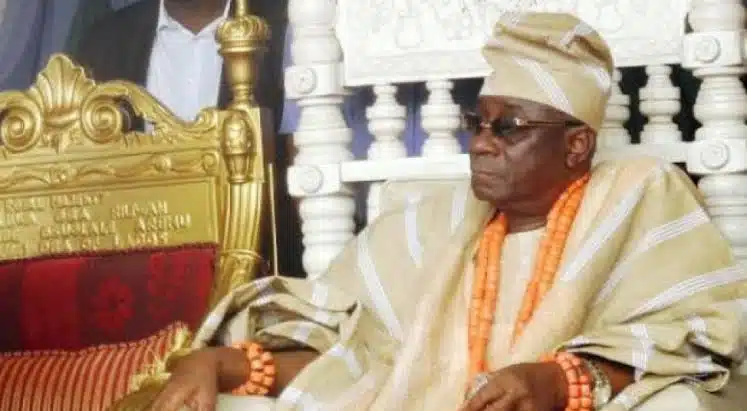
Oba Akiolu, the revered monarch of Lagos, recently made headlines by revealing a jaw-dropping incident from Nigeria's tumultuous past. During an interview on May 22, 2026, he recounted how he turned down a staggering ₦5 million bribe offered to him during the oppressive regime of former military ruler Sani Abacha. This bold claim not only highlights Akiolu's unwavering principles but also exposes the corrupt practices that pervaded Nigeria’s political landscape in the 1990s.
Akiolu's account sheds light on the pervasive culture of bribery that characterized Abacha’s rule, a time when many leaders succumbed to the allure of corruption. "I refused to be swayed by the money; my conscience wouldn’t allow it," Akiolu stated emphatically. His rejection of the bribe is not just a personal victory; it serves as a beacon of hope for a society grappling with the shadows of its past. This incident, occurring in the late 1990s, underscores the importance of integrity in leadership, especially during times of rampant corruption.
To fully grasp the significance of Akiolu's revelation, one must understand the historical backdrop of Nigeria during Abacha's regime, which lasted from 1993 until his death in 1998. This was a period marked by human rights abuses, political assassinations, and widespread corruption. Many prominent figures, including politicians and business leaders, were often entangled in bribery and extortion schemes. Akiolu's courageous stance against such practices is a stark reminder of the moral dilemmas faced by those in power and their choices amid adversity.
The implications of Akiolu's story resonate beyond personal integrity. His bold admission reflects a broader narrative about the ongoing struggle against corruption in Nigeria. As citizens continue to demand accountability from their leaders, Akiolu's experience serves as an inspiring example. Political analysts suggest that such revelations could ignite a renewed call for transparency and integrity in governance, fostering a more accountable political climate in Nigeria. "This is a moment for reflection and action," stated Dr. Tunde Olowokere, a political analyst. "We must learn from the past to build a better future."
Looking ahead, Nigeria finds itself at a critical juncture. As the nation navigates its complex political landscape, Akiolu’s revelations may spark discussions about ethics and governance in upcoming elections. Observers will be watching closely to see how this story influences public sentiment and political accountability. Will more leaders step forward to share their experiences? The future may hold significant changes as the quest for integrity in Nigerian politics continues to unfold.