
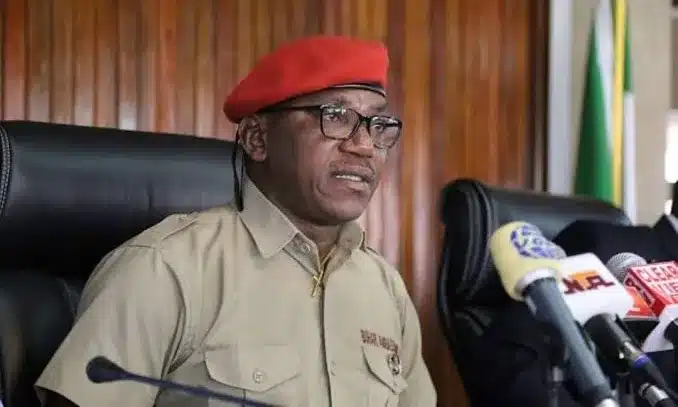
In a striking declaration, former Minister of Youth and Sports, Solomon Dalung, asserted that candidates aiming for electoral success in Nigeria must secure the support of the northern region. Speaking at a political conference in Abuja on May 22, 2026, Dalung emphasized the undeniable influence of the North in shaping electoral outcomes, stating, "Without the North, no candidate can win. It’s a reality that we must accept." His words reverberated through the political landscape, setting the stage for a fierce battle for regional allegiance in the upcoming elections.
Dalung's comments come amidst a shifting political climate in Nigeria, where regional dynamics have increasingly dictated electoral strategies. The North, home to a substantial population, holds the key to winning elections—both in terms of votes and political alliances. "The North has the numbers and the political machinery that candidates must engage with to stand a chance," he added. This statement raises questions about the strategies candidates will adopt to woo northern voters, especially in a country grappling with diverse ethnic and religious identities.
Historically, Nigeria's political terrain has been characterized by regionalism, with the North often viewed as a kingmaker. This trend became particularly evident during the 2015 and 2019 general elections when northern votes decisively influenced outcomes. The political landscape has evolved, but the North's central role remains unchanged, as seen in recent gubernatorial elections where regional support proved critical for success. Dalung’s assertion is not just an opinion; it reflects a broader understanding of Nigeria's electoral patterns and the necessity for candidates to build coalitions across the regions.
The implications of Dalung's remarks are profound. Politicians and political parties must now strategize on how to effectively engage northern constituencies. Analysts predict that candidates will intensify outreach efforts, focusing on issues that resonate with northern voters, such as security, economic development, and social welfare. Local leaders and community influencers will play pivotal roles in bridging gaps between candidates and voters. The stakes are high, as failure to connect with the North could lead to electoral defeat, affecting not just individual candidates but the political landscape as a whole.
Looking ahead, political observers will closely monitor how candidates adapt their campaigns in light of Dalung's statements. As the election approaches, expect an uptick in political activities aimed at courting northern voters. The upcoming months will reveal which candidates can forge the necessary alliances to secure the North’s support, ultimately determining the trajectory of Nigeria's political future. The outcome could redefine not only individual careers but also the broader political strategies in Africa's most populous nation.