
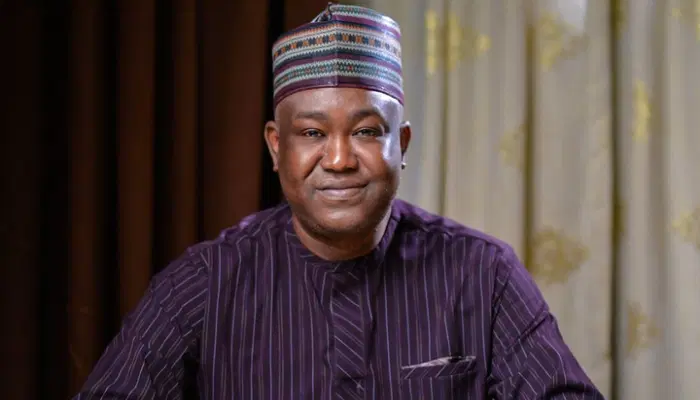
In a bold statement that reverberates through Nigeria's political landscape, Gbenga Olawepo-Hashim has officially declared his intention to run for the presidency in 2027 under the banner of the Accord Party. This announcement, made in Abuja, comes at a time when political maneuvering is intensifying among parties and prospective candidates eager to position themselves ahead of the next general election. Olawepo-Hashim emphatically stated, "The presidency of Nigeria is too big for anyone to allocate," directly addressing comments made by a governor that suggested the Accord Party would not participate in the upcoming election. He made it clear that the decision rests ultimately with the Nigerian people and a higher power, not with political elites.
Olawepo-Hashim's declaration signals a significant shift in the political dynamics as he mobilizes support for his campaign. He claimed that his grassroots efforts have already recruited over one million supporters into the Accord Party, a move that underscores his commitment to building a strong political base. "We have quietly mobilised about one million of our supporters into the Accord Party, and we are still doing so," he revealed, showcasing the momentum of his campaign. His remarks reflect a growing anxiety among politicians as the 2027 election approaches, with many concerned about their standing in a rapidly evolving political climate.
Historically, Nigeria has seen its share of political power struggles, with various parties and individuals vying for control in a system often dominated by established players. The political landscape has been shaped by numerous electoral battles, each revealing the complexities of a diverse electorate. As Nigeria heads towards another election cycle, political alignments are becoming increasingly fluid, and Olawepo-Hashim’s move to the Accord Party represents a strategic effort to capitalize on this uncertainty. His comments challenge the status quo and indicate a desire for a more inclusive political discourse.
The implications of Olawepo-Hashim's candidacy could resonate beyond party lines, potentially influencing the broader political narrative in Nigeria. His insistence that the presidency cannot be dictated by a select few is a call to the electorate to reclaim their power. Political analysts note that his approach may appeal to voters disillusioned with traditional political machinations. He stated, "When power changes hands, those who think they can control it will be shocked and humbled," a sentiment that raises eyebrows and ignites hope among many looking for change.
As the 2027 election draws closer, all eyes will be on the Accord Party and Olawepo-Hashim's campaign strategies. Observers should monitor how he builds on his momentum and whether he can galvanize enough support to challenge the entrenched political elites. The next few months will be critical, as alliances form and the political landscape continues to evolve. This declaration marks just the beginning of what promises to be an electrifying election cycle in Nigeria.


