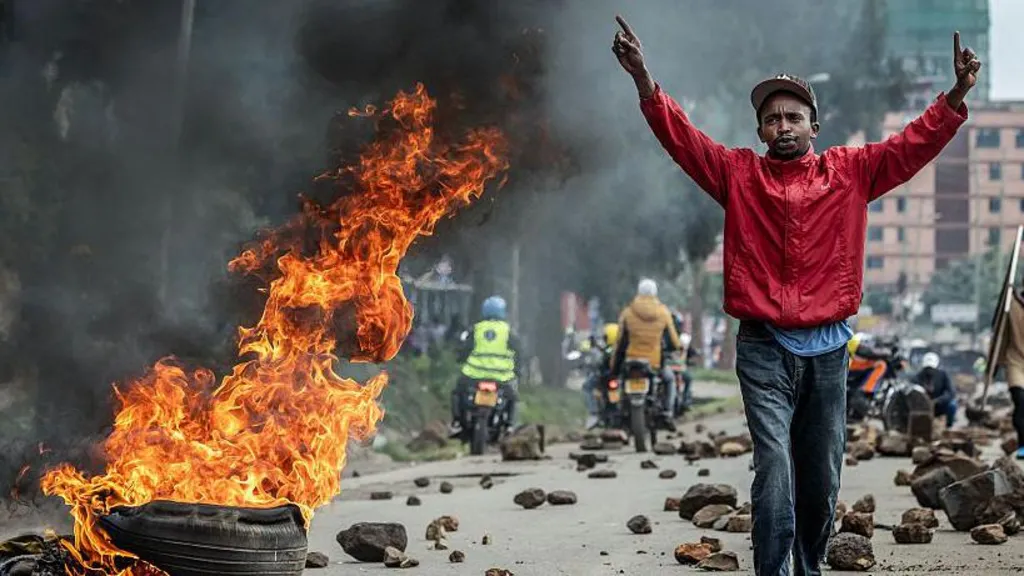
A nationwide strike has plunged Kenya into chaos, leaving thousands of commuters stranded and businesses paralyzed. The crisis erupted as public transport operators halted services to protest a staggering 20% increase in fuel prices, which recently reached record highs. In the capital city of Nairobi, key roads lay eerily empty, forcing many to resort to walking long distances to reach their destinations on October 3, 2023. As the protests escalate, scenes of barricaded roads and burning debris paint a vivid picture of the unrest gripping the nation.
The Transport Sector Alliance (TSA), which represents public transport operators, called for an all-out shutdown, urging not just bus and truck drivers, but all motorists to stay off the roads. "This action is not only for transport operators, but for every Kenyan citizen," the TSA declared. The fuel price surge, which now stands at 242 shillings ($1.8) per litre for diesel and petrol, has sparked outrage as families grapple with the broader implications of rising living costs. Treasury Minister John Mbadi acknowledged the unfortunate reality of the price hikes, but called the strike "completely uncalled for," insisting that the government would not yield to emotional decisions amid a global crisis.
Kenya’s fuel dependency is a critical issue, heavily reliant on imports from the Gulf. The situation worsened after disruptions in supply chains linked to the ongoing US-Israel conflict with Iran, which began on February 28, 2023. While a ceasefire has been declared, the ripple effects continue to drive prices skyward, leaving citizens to bear the brunt of this global issue. The Energy and Petroleum Regulatory Authority (Epra) recently raised prices, exacerbating an already dire economic climate.
The impact of this strike extends far beyond the transport sector. It has triggered widespread reactions from citizens, businesses, and experts alike. Schools in Nairobi have advised students to stay home, while local businesses remain shuttered. Reports of clashes between police and protesters have emerged, with authorities deploying tear gas to disperse demonstrators who are blocking roads and accosting drivers. The TSA has accused the government of failing to protect its citizens from the escalating costs, and has demanded a rollback of the recent price hikes, calling for reductions of approximately 35%.
Looking ahead, Kenyans brace for what could be a prolonged standoff. As public transport remains halted and tensions simmer, the government will face mounting pressure to address the growing dissatisfaction. Observers will be keenly watching for any signs of negotiation or compromise, as the potential for further unrest looms large over the nation. The future of transportation in Kenya hangs in the balance, with citizens demanding decisive action from their leaders.