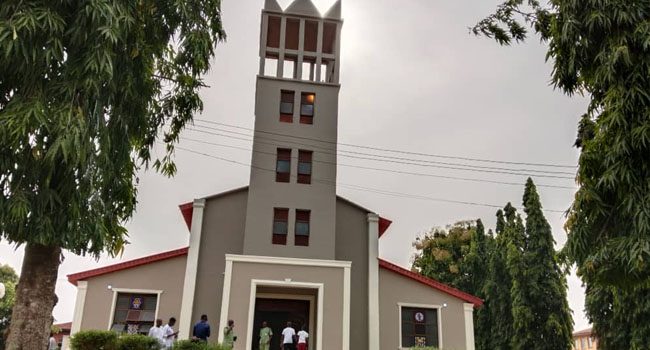
In a tense courtroom in Abuja, Justice Emeka Nwite has reserved judgment in the trial of five men accused of orchestrating the horrific June 5, 2022, attack on St. Francis Catholic Church in Owo, Ondo State. This brutal assault claimed the lives of over 40 worshippers, making it one of the bloodiest attacks in Nigeria’s recent history. The atmosphere was charged as legal representatives from both sides presented their final arguments, leaving the nation on edge as it waits for the court’s decision.
During the proceedings, the prosecution's lead counsel, Ayodeji Adedipe (SAN), painted a chilling picture of the crime, urging the court to impose the maximum penalty of death on the defendants. He emphasized that the evidence presented throughout the trial demonstrated not only the defendants' guilt but also the relentless pursuit of justice by Nigerian security agencies. "This case highlights the depths of our commitment to hold accountable those who terrorize our communities," Adedipe asserted, underscoring the prosecution's thorough investigations.
The background of this case is deeply troubling. On that fateful Sunday, gunmen stormed the church during a service, creating chaos and horror as they opened fire on innocent worshippers. This attack resonated throughout Nigeria, sparking national outrage and raising concerns about security in places of worship. The five accused — Idris Abdulmalik Omeiza, Al Qasim Idris, Jamiu Abdulmalik, Abdulhaleem Idris, and Momoh Otuho Abubakar — now stand at the center of a trial that has drawn attention from across the globe.
The impact of the Owo church attack reverberates far beyond the courtroom. It has left families shattered, communities in mourning, and a nation grappling with fears of further violence. Reactions have poured in from various quarters, with citizens calling for justice and stronger measures to protect places of worship. "We cannot let this act of terror define us, but we must ensure that those responsible face the full weight of the law," said a local advocate for peace. This trial represents a significant moment for Nigeria as it seeks to confront its challenges with insecurity and violence.
As the court reserves its judgment, all eyes will remain fixed on Abuja. The timeline for when the decision will be communicated remains uncertain, but it could arrive within the next 24 hours. Observers and citizens alike are eager to see whether the court will send a powerful message against terrorism and uphold justice for the victims of this heinous crime. The outcome of this trial could set a precedent for how Nigeria addresses future acts of violence against its citizens.