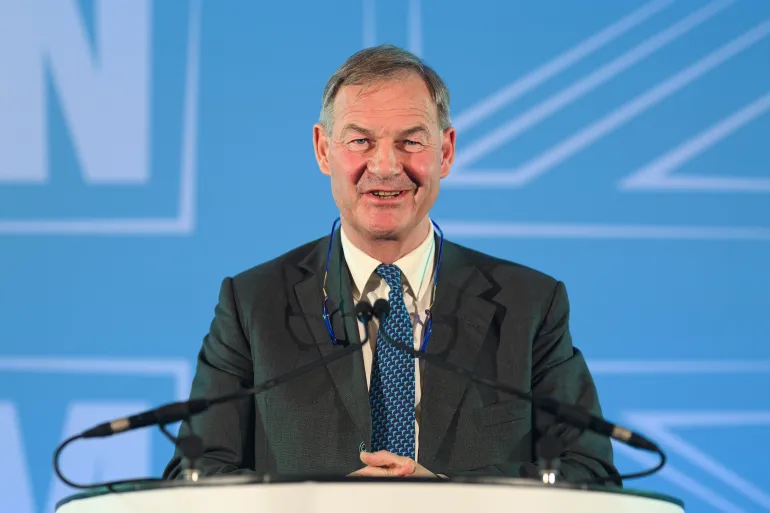
In a dramatic twist in UK politics, the emergence of the far-right party Restore Britain has left Nigel Farage’s Reform UK reeling. Just days ago, Farage delivered an impassioned speech in a field, calling for a response filled with "pure cold rage" following the tragic death of a teenager, Henry Nowak, who was fatally stabbed in December 2025. This incident, which has drawn widespread attention, saw police fail to apprehend the attacker, leading to heated public outrage. As the nation grapples with this tragedy, the political landscape shifts dangerously to the right.
Restore Britain, spearheaded by Rupert Lowe, a former member of Reform UK, has quickly gained traction since its inception just four months ago. The party's manifesto promises to implement the "most ambitious programme of mass deportations ever seen in Britain," tapping into a growing sentiment of anti-immigration fervor among voters. With over 96,000 members and 13 councillors defected from Reform, Restore is positioning itself as a significant player in the far-right arena. Lowe’s vision resonates deeply with a disenchanted base, and experts warn this could disrupt the dominance of established far-right factions.
The backdrop to this political upheaval is the ongoing struggle within the Conservative Party and its waning influence. The recent election losses have left many former Conservative supporters seeking a new home, driving them towards more extreme parties like Restore. The tragic death of Nowak has become a rallying point for these groups, with Farage using it to highlight what he claims is a systemic failure to protect white citizens. Kemi Badenoch, the former Conservative leader, echoed these sentiments, pointing out the personal connection to the tragedy, stating, “That could be my boy.” This emotional appeal underscores the urgency with which these parties are mobilizing their bases.
The impact of Restore's rapid rise cannot be understated. As the party gains momentum, it poses a significant threat not only to Reform UK but also to the broader political landscape in the UK. Politicians from various parties express concern about the potential normalization of far-right rhetoric, which could lead to increased division and hostility within society. The upcoming by-election in Makerfield, Greater Manchester, on June 18 becomes a critical battleground. It will test the strength of these far-right factions and their ability to sway mainstream politics in their favor.
Looking ahead, political observers are closely monitoring the developments in Makerfield. The outcome of the by-election could signal whether far-right ideologies will gain further legitimacy in UK politics. The battle between Restore and Reform is heating up, and the stakes are higher than ever. Voters must now navigate a landscape where once-fringe ideas threaten to become mainstream, challenging the very fabric of British society.