
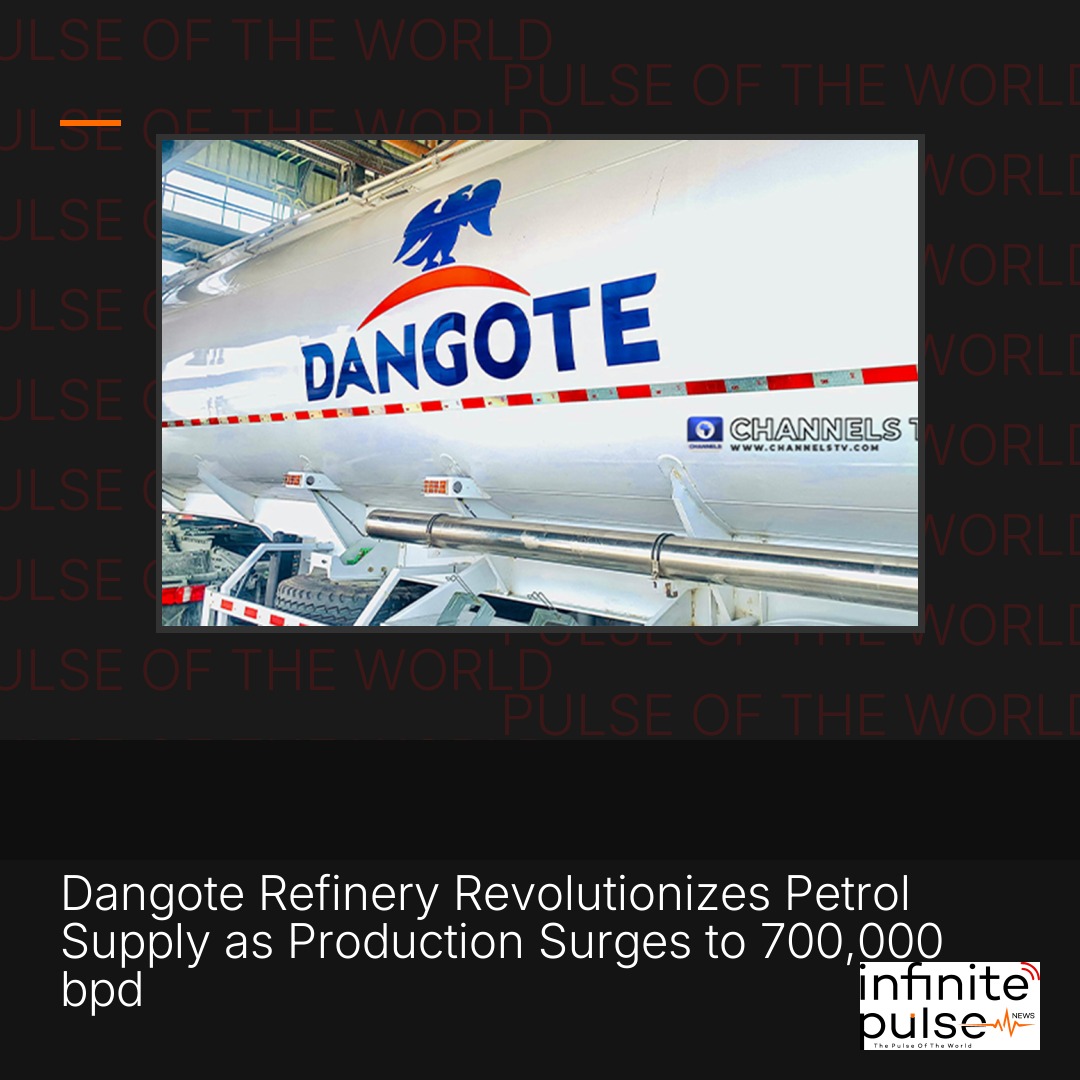
In a significant turnaround for Nigeria's fuel supply, Dangote Petroleum Refinery & Petrochemicals has ramped up its petrol production to an impressive 700,000 barrels per day (bpd). This surge comes just days after the refinery announced a price cut for Premium Motor Spirit (PMS), known locally as petrol. On Saturday morning, June 6, 2026, Lagos witnessed a startling influx of petrol tankers at MRS stations, causing major traffic jams on the Lagos/Ibadan expressway as desperate motorists lined up for the newly available fuel.
The current price of petrol at MRS stations has dropped to N1,282 per litre, a stark contrast to prices at other stations, which range between N1,295 and N1,380 per litre. This price reduction follows last week’s announcement by the refinery that it had cut the ex-depot price from N1,275 to N1,250 per litre. The Vice-President for Oil and Gas at Dangote Industries, Devakumar Edwin, confirmed that this increase in production is part of an ambitious plan to more than double the refinery's capacity to 1.4 million bpd within the next 30 months, aiming to solidify Nigeria's position in the global refining landscape.
The Dangote Refinery, which began operations in May 2023, has swiftly become a backbone in Nigeria’s energy sector. Initially commissioned to handle 650,000 bpd, the facility has exceeded this capacity, showcasing its ability to optimize performance and process additional crude oil feedstock. This operational milestone not only highlights the refinery's efficiency but also its critical role in reducing Nigeria’s reliance on imported refined products, enhancing the country’s energy independence.
The ripple effects of this increased production are palpable across Nigeria. Motorists are rejoicing as fuel prices stabilize, while businesses reliant on petroleum products begin to feel relief from supply shortages. Experts believe that the expansion of the Dangote Refinery will foster economic growth and job creation in the region, while also positioning Nigeria as a significant player in the global petroleum market. As Edwin articulated, the refinery's success reflects a strategic move toward continental and global refining dominance, aiming to meet both local and international demands.
As the Dangote Refinery continues to ramp up production, industry observers will be closely monitoring its progress. The next significant milestone will be the expected increase in capacity to 1.4 million bpd, which promises to further transform Nigeria's energy landscape. The implications of this development are vast, not just for Nigeria but for the entire African continent, as it strives for greater energy self-sufficiency and export capabilities in the global market.