
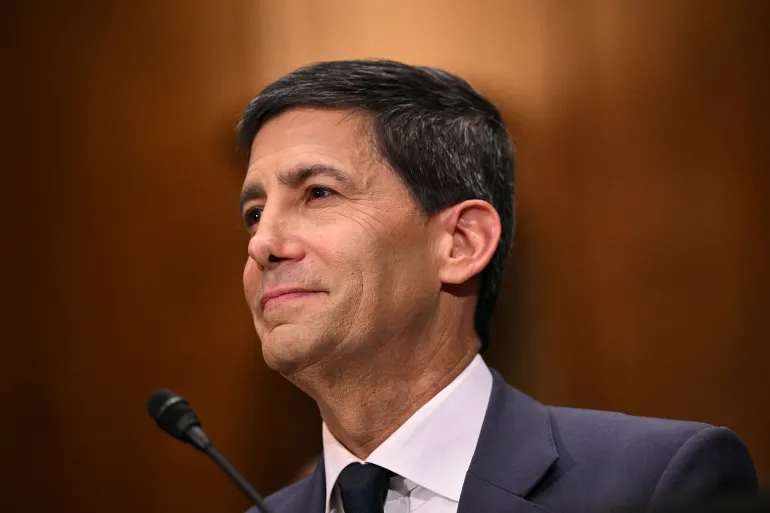
Kevin Warsh has officially taken the helm as the new chair of the United States Federal Reserve, having sworn in on May 22, 2026. This pivotal moment arrives as the nation grapples with soaring inflation rates and increasing scrutiny over the Fed's independence from political influence. Warsh succeeds Jerome Powell, who held the position since 2018. The atmosphere surrounding his confirmation was charged, with partisan divisions evident as the Senate voted strictly along party lines, except for a notable break by Pennsylvania Senator John Fetterman, showing the contentious nature of Warsh's ascent.
During his confirmation hearing, Warsh faced fierce criticism from Democratic Senator Elizabeth Warren, who labeled him a “sock puppet” for former President Donald Trump. The political landscape surrounding the Federal Reserve has shifted dramatically, with pressures from Trump urging the Fed to cut interest rates. “I want Kevin to be totally independent and do a great job,” Trump stated, emphasizing that he did not want Warsh to be swayed by political agendas. Given the ongoing challenges, Warsh’s ability to maintain the Fed's traditional non-partisan stance will be closely monitored.
Historical context reveals a tumultuous relationship between the Federal Reserve and the executive branch over the last few years. Under President Joe Biden, Warsh was a proponent of maintaining interest rates, but his stance evolved with Trump’s presidency, where he began advocating for rate cuts in alignment with Trump’s directives. This evolution raises questions about his commitment to independent monetary policy, especially as inflation continues to challenge the economy. Warsh's first policy meeting is scheduled for June 16-17, a critical juncture as he navigates these pressures.
The implications of Warsh's leadership stretch beyond the walls of the Fed, impacting millions of Americans. Rising consumer prices, notably a 3.8 percent increase year-over-year, have strained household budgets and fueled concerns about the economy's direction. Energy prices have surged by 17.9 percent over the past year, exacerbating the financial burden on consumers. As Americans feel the pinch, reactions to Warsh's appointment vary widely, with some experts expressing skepticism about his ability to uphold the Fed's independence while under presidential pressure.
Looking ahead, all eyes will be on Warsh as he leads his first monetary policy meeting next month. The Federal Reserve's decisions will be pivotal in shaping the future economic landscape, amid calls for lower interest rates to combat inflation. Observers anticipate whether Warsh can balance political expectations with the Fed’s mandate to foster economic stability. As the situation unfolds, the world will watch closely to see if Warsh can navigate these turbulent waters effectively.