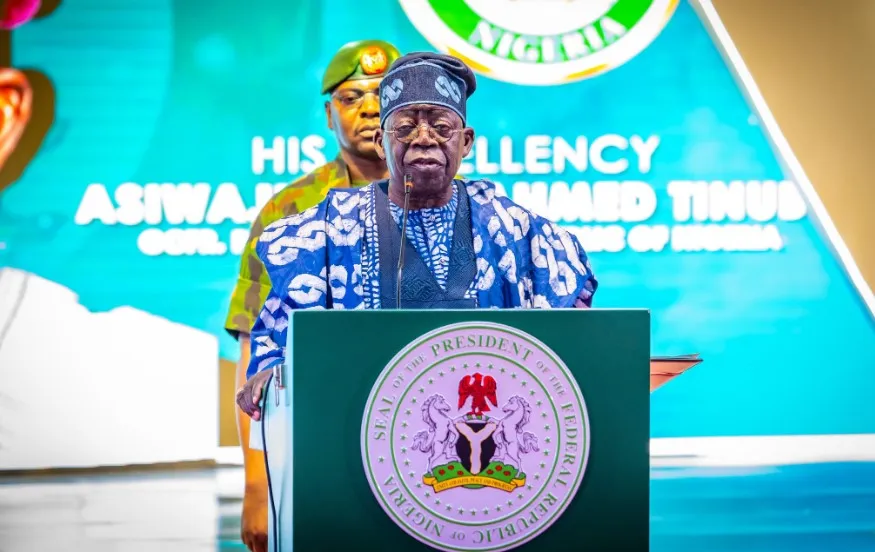

In a crucial move for Nigeria's political future, the All Progressives Congress (APC) held its House of Representatives primary elections on Saturday, marking a significant step towards the 2027 general elections. This event unfolded across various states, generating a mix of elected representatives and consensus candidates. Originally set for Friday, the primaries faced a last-minute delay, raising eyebrows about internal party dynamics. Against this backdrop, President Bola Tinubu urged party members to prioritize peace and uphold democratic principles, warning against the pitfalls of infighting and "do-or-die" politics.
The stakes were high, especially in Katsina State, where Yusuf Muhammadu Buhari, son of the late former President Muhammadu Buhari, clinched the APC nomination for the Daura Federal Constituency. He triumphed over Auwal Lawal Musa, the son of the former Director-General of the Department of State Services, Lawal Musa Daura. This victory not only highlights the influence of political lineage but also intensifies the competition within the party. In a notable upset in the Mani/Bindawa Federal Constituency, Hajiya Jamila Abdu Mani, who serves as the Special Assistant to Governor Dikko Radda on Girl Child Education, decisively defeated her rival, Ahmed Saleh Junior, garnering an impressive 24,989 votes against just 1,256.
This moment did not occur in isolation. The APC primaries reflect a broader historical context, one marred by previous struggles and power plays within Nigeria’s political arena. The party's internal contests have been characterized by fierce rivalries, and this year's elections exemplify the ongoing struggle for influence among established political families and emerging leaders. Many observers recall the chaotic scenes from previous primaries, where disagreements led to violent clashes, making the latest call for unity by President Tinubu even more critical.
The repercussions of these primaries extend beyond the APC. The political landscape in Nigeria is poised for a shake-up as various constituencies see new faces and entrenched politicians fighting to maintain their positions. Reactions from voters and analysts are mixed; while some express hope for fresh leadership, others fear that divisions within the party could weaken its overall strength in the upcoming elections. Officials and party loyalists are bracing for the potential fallout, as the implications of these primaries ripple through the country.
Looking ahead, all eyes will be on the APC as it prepares for the next phase of its political strategy. Observers expect further developments as consensus candidates emerge and party dynamics continue to shift. Voter sentiments will play a critical role in shaping these outcomes, making it essential for the APC to unify its factions. The road to the 2027 elections promises to be fraught with challenges, but it also offers an opportunity for transformation in Nigeria's political landscape.