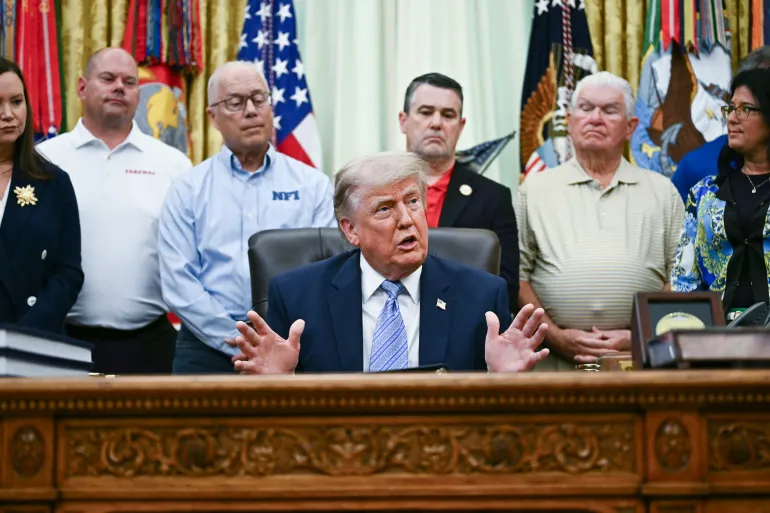
In a week marked by uncertainty and high-stakes diplomacy, President Donald Trump teetered on the brink of military escalation with Iran. Just days ago, he revealed he was only an hour away from resuming attacks on Iran, a move that could plunge the region into chaos. Yet, in a sudden shift, he expressed hope for a lasting ceasefire, leaving many analysts questioning the consistency of his approach. As of Thursday, Iran announced it was reviewing Washington’s response to its latest ceasefire proposal, raising the stakes for both nations.
The complexities of this situation deepened when Trump shared an op-ed advocating for aggressive tactics against Tehran. The piece, authored by Richard Goldberg of the Foundation for Defense of Democracies, suggested a strategy to "crush Tehran in three moves," including sustaining economic warfare and asserting military dominance in the Strait of Hormuz. This comes amid reports of a tense phone call between Trump and Israeli Prime Minister Benjamin Netanyahu, where they clashed over the future conduct of the Iran war. While Netanyahu urged for renewed military action, Trump appeared reluctant, hoping to negotiate a diplomatic resolution instead.
The U.S.-Iran conflict has roots reaching back to the Obama era, marked by attempts to broker a nuclear deal that ultimately unraveled under Trump’s administration. Since the onset of hostilities on February 28, amidst ongoing negotiations over Iran’s nuclear ambitions, the situation has escalated dangerously. A ceasefire was reached on April 8, following Trump’s dire warnings that failure to secure a deal would lead to catastrophic consequences. This volatile backdrop puts immense pressure on both leaders to navigate a path forward that avoids further escalation.
The ramifications of this standoff extend well beyond the borders of Iran and the U.S. Citizens in the region face the terrifying prospect of renewed conflict, while global markets tremble at the thought of disrupted oil supplies from the Strait of Hormuz. Experts warn that any miscalculation could trigger a wider conflict that destabilizes the entire Middle East. Reactions from officials have varied, with some calling for restraint while others advocate for a hardline stance against Iran. The world watches closely, aware that the actions taken in the coming days could reshape geopolitical alliances for years to come.
As the situation unfolds, observers should keep their eyes peeled for further developments in the diplomatic negotiations. The potential for a renewed military conflict looms large, and the next steps from both the Trump administration and Iranian leadership will be critical. With tensions at an all-time high, what happens next could redefine U.S.-Iran relations and impact global stability significantly.