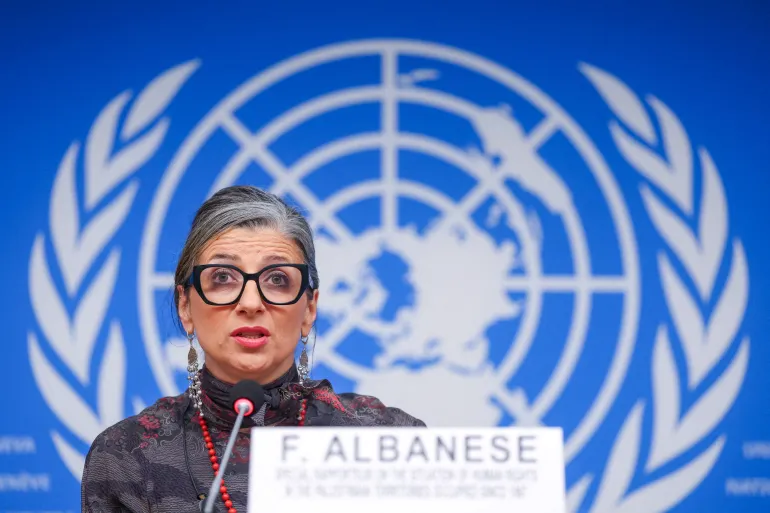
In a startling turn of events, the United States government has reaffirmed its commitment to sanctioning Francesca Albanese, a prominent UN expert on Palestinian rights. This announcement comes shortly after a federal court temporarily lifted the sanctions, which were initially imposed by the Trump administration in July 2025. Albanese, known for her critical stance against Israeli policies, faces an uncertain future as she fights against these sanctions that have severely impacted her life and career.
The State Department clarified its position on Thursday, stating that the recent court ruling does not signal a shift in U.S. policy regarding Albanese. The court's decision, made by U.S. District Judge Richard Leon, was only a preliminary injunction and not a final ruling. "The Government has appealed the court’s order," a State Department spokesperson confirmed, emphasizing that they intend to return Albanese to the sanctions list if the decision is overturned. This ongoing legal battle highlights the contentious relationship between U.S. policy and international human rights advocacy.
Francesca Albanese's troubles began after she called for the International Criminal Court to issue arrest warrants against Israeli officials, including Prime Minister Benjamin Netanyahu, for alleged war crimes. Her outspoken criticism of Israel's actions in Gaza, where the death toll has reportedly surpassed 75,000, put her directly in the crosshairs of U.S. sanctions. The sanctions not only restricted her financial access in the U.S. but also affected her family, with her daughter being a U.S. citizen. This personal impact adds a layer of urgency to Albanese's fight against what she describes as an infringement on her constitutional rights.
The implications of this situation extend far beyond Albanese herself. Critics argue that the sanctions represent a broader trend of silencing dissenting voices on U.S. foreign policy, particularly regarding Israel and Palestine. Human rights advocates and legal experts are closely monitoring the case, asserting that it raises crucial questions about freedom of speech and the extent of government power to impose sanctions based on political disagreements. Albanese's legal team argues that her case exemplifies the dangers of using sanctions as a tool to punish individuals for their views.
As the legal battle unfolds, observers should watch for the next steps from the U.S. government and the ongoing court proceedings. The outcome could set a significant precedent for how human rights advocates are treated in the political arena, both in the U.S. and globally. With a pivotal hearing expected soon, the world is left to wonder how far the U.S. will go to maintain its stance against dissenting voices like Albanese's.