In a stunning development, U.S. President Donald Trump announced he has postponed military action against Iran, igniting a wave of uncertainty across global markets. This decision came after intensive negotiations with key Middle Eastern allies, including Qatar, Saudi Arabia, and the UAE, who urged Trump to reconsider his aggressive stance. The announcement reverberated worldwide, with Asian markets responding cautiously to the potential for peace amid a backdrop of escalating tensions.
Trump revealed on his Truth Social platform that he had been persuaded by Arab leaders to hold off on a planned military strike against Iran, initially scheduled for the following day. "Serious negotiations are now taking place," he stated, hinting at a possible diplomatic breakthrough that could avert further conflict. However, he maintained a defensive posture, warning that the U.S. military remains ready for a large-scale assault should talks fail. This precarious balance of diplomacy and military readiness underscores the volatility of the situation in the region, which has already seen a blockade of the crucial Strait of Hormuz — a pathway for approximately 20% of global oil exports.
The backdrop to this urgent diplomatic maneuvering is the ongoing conflict initiated by the U.S. and Israel on February 28, which has strained relations and heightened fears of an all-out war. Trump's assertion of a "very positive development" suggests a shift in tone; however, the reality remains that Iran has consistently denied pursuing nuclear weapons, leaving many observers skeptical about the feasibility of any deal. The stakes are high, as the potential for renewed hostilities could destabilize not just the Middle East, but also global oil markets.
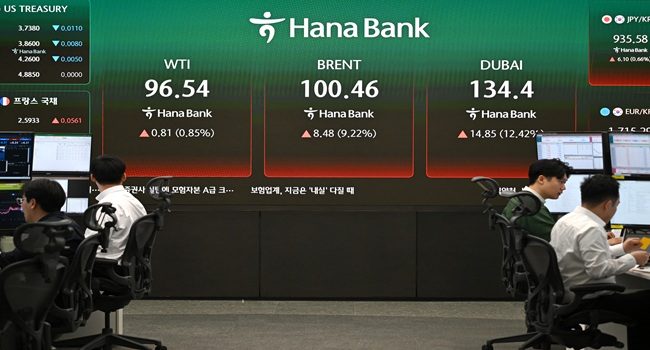
The impact of these developments was felt immediately in energy markets, where oil prices dipped slightly on the news of potential negotiations. Brent crude fell by 2.1%, settling at $109.75 per barrel, while West Texas Intermediate saw a modest increase of 1.2%, reaching $107.40. Despite this slight relief, analysts caution that volatility is expected to continue, as the situation remains fraught with uncertainty. Investors are on edge, with gold and silver prices rising as safe-haven assets, indicating a lack of confidence in the current market stability.
Looking ahead, investors should closely monitor upcoming negotiations between the U.S. and Iran, as well as the quarterly earnings report from Nvidia, a major player in the tech industry. The outcome of these discussions could significantly influence market dynamics across Asia and beyond. With tensions still simmering, the world watches intently for any signs of escalation or resolution that could reshape the geopolitical landscape.