The Senate Public Accounts Committee (SPAC) has exonerated the Nigeria Customs Service (NCS) from allegations of a ₦62.2 billion under-remittance contained in the 2019 audit report of the Office of the Auditor-General for the Federation.
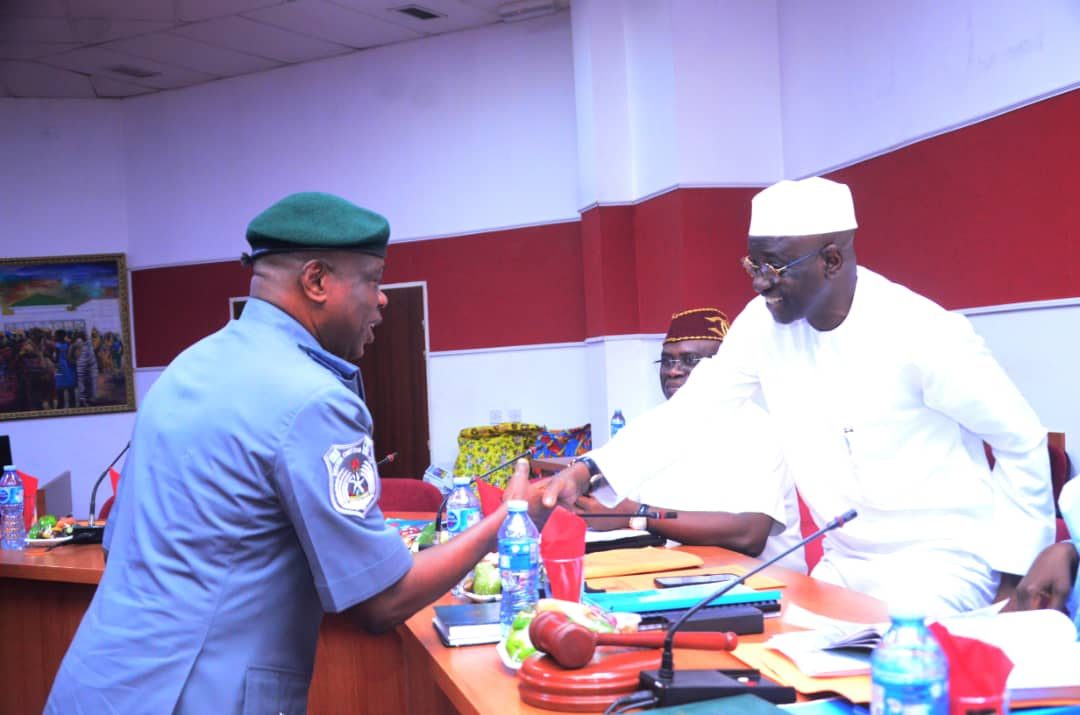
The clearance came after an investigative hearing held on Tuesday, June 16, 2026, where the Comptroller-General of Customs, Adewale Adeniyi, presented detailed explanations to lawmakers, demonstrating that the alleged shortfall resulted from a misclassification of revenue streams rather than any failure to remit funds.
The query, presented by a representative of the Auditor-General's office under the supervision of SPAC Chairman, Ibrahim Dankwambo, alleged that out of the ₦691.242 billion generated by the Customs Service in 2017, only ₦629.23 billion was remitted into the Federation Account, leaving an outstanding balance of ₦62.2 billion.
However, Adeniyi told the committee that the alleged deficit was based on an incorrect interpretation of Customs revenue classifications.
According to him, while some levies collected by the Service are statutorily required to be remitted into the Federation Account, others are designated for specific purposes and are not meant to be paid into the account.
"The under-remittance of ₦62.2 billion levelled against Customs in the 2019 audit report was wrongly arrived at through misclassification of levies collected," Adeniyi explained.
He added that levies on local production of products such as wheat, textiles, wines, and other designated items fall outside the category of revenues payable into the Federation Account, accounting for the entire amount identified as unremitted by auditors.
Following the clarification, the committee accepted the Customs Service's explanation and cleared the agency of any wrongdoing regarding the alleged under-remittance.
Committee member, Babangida Hussaini, expressed surprise that the matter had escalated to the Senate level, noting that the issues involved appeared to be straightforward technical discrepancies that could have been resolved during the initial audit review process.
Drawing from his experience as a former civil servant, Hussaini questioned why the misunderstanding was not addressed earlier, thereby avoiding a full-scale legislative investigation.
The development represents a significant endorsement of the financial accountability processes of the Nigeria Customs Service and underscores the importance of accurate revenue classification in public sector audits.
The Senate committee's decision effectively closes the chapter on one of the key audit queries raised against the Customs Service in the Auditor-General's 2019 report.