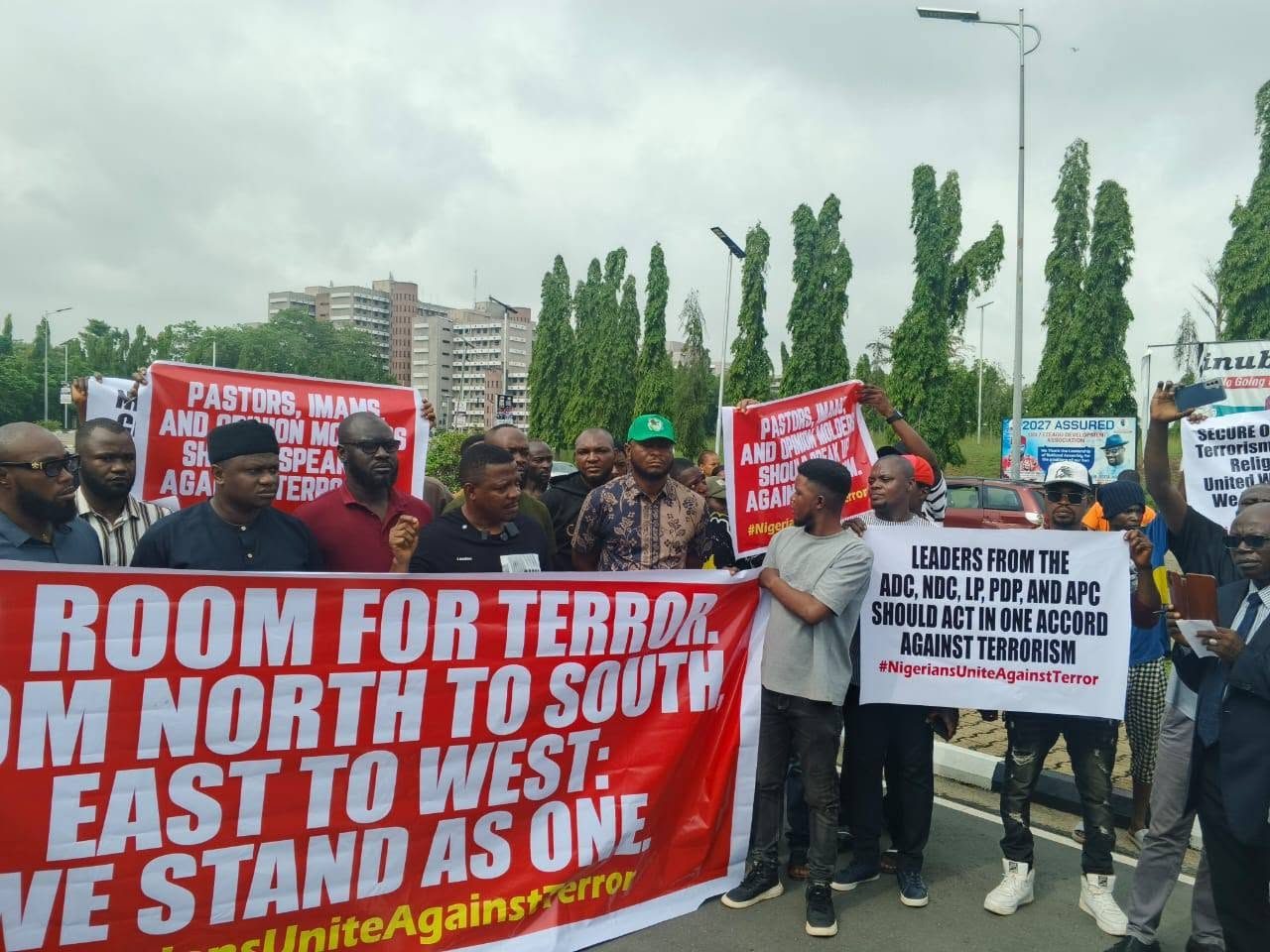
On Tuesday, a passionate group of young Nigerians descended upon the National Assembly in Abuja, demanding immediate intervention to address the crippling insecurity plaguing the nation. The protest, initiated from the Federal Ministry of Women Affairs, bore the banner ‘Nigerians Unite Against Terror.’ Convener Isah Abubakar voiced the collective frustration, stating, “Insecurity has become a nationwide problem affecting everyone.” He painted a grim picture of life in Nigeria, emphasizing that certain roads become no-go zones after dark, a reality that no Nigerian should have to endure.
The protestors made clear that the threat of banditry does not discriminate. Abubakar poignantly highlighted, “The bandits are not selective. They don’t care about your religion, your tribe, your political party, or your tradition.” His words resonated with the crowd, as he urged all Nigerians to unite against this grave issue. “It is our responsibility as citizens to call the attention of those responsible for protecting lives and properties that enough is enough,” he declared, calling for a collective demand for security and protection, especially for vulnerable groups such as women and children.
The backdrop of this urgent plea stems from a long-standing crisis of insecurity in Nigeria, exacerbated by the rise of armed groups and bandits who have taken control of vast regions. Historical neglect and ineffective governance have allowed this crisis to fester, leaving many communities vulnerable and terrified. The protest reflects a growing discontent among the youth, who feel their safety and future are at stake. Abubakar’s call for action resonates deeply within a context where many political leaders seem disconnected from the realities faced by ordinary citizens daily.
This protest isn't just an expression of frustration; it's a clarion call for change. The implications of this unrest are profound, affecting every facet of Nigerian life—from politics to the economy. Fellow speaker Austin Okhai emphasized the political ramifications, stating, “No political party can go on a rally when the people you mobilize cannot return to their homes.” He also pointed out the alarming reality that even political leaders are not immune to the threat of violence, citing the kidnapping of the APC chairman in Kebbi. The youth's demands echo a nationwide cry for accountability and collaboration among leaders to restore peace and safety.
Looking ahead, the protests signal a pivotal moment in Nigeria's struggle against insecurity. The youth are determined to keep the pressure on government officials and former military leaders to step up and take action. As Abubakar noted, “Our voices must be heard,” urging citizens to report any suspicious activities. The urgency for effective solutions to combat insecurity remains high, and all eyes will be on the National Assembly as they respond to this unprecedented call for action from Nigeria's future leaders.