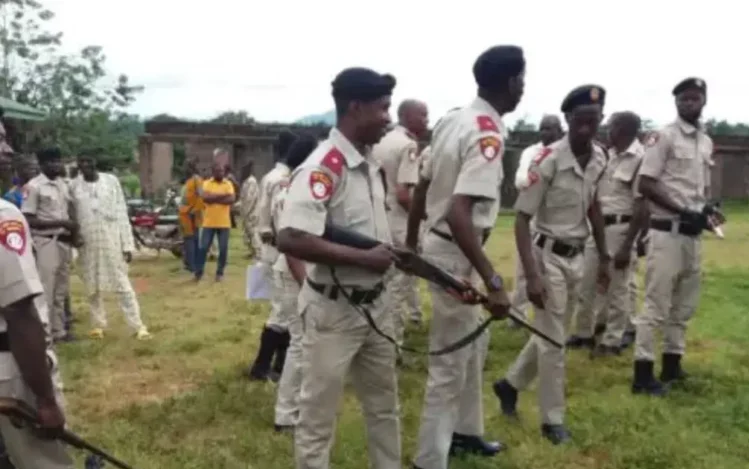
In a dramatic turn of events, the Nigerian government has charged seven individuals, including two retired military officers, for their involvement in illegal security operations and firearms offenses. The shocking allegations surfaced on Wednesday when the Director of Public Prosecutions, Rotimi Oyedepo, filed a suit at the Federal High Court in Abuja. The defendants, identified as Adewale Osatimehin, Major Abubakar A. Mohammed, a retired major, Superintendent Okonkwo Lawrence, Usman Yakasai, Sunday Akpa, another retired major, Jov Charles, and Kuku Reuben, stand accused of operating without the necessary licenses. The charges stem from their connection to an organization known as the Nigeria Forest Security Service (NFSS), which has raised serious concerns over national security and law enforcement protocols.
The court filing, marked FHC/ABJ/CR/285/2026, outlines the gravity of the situation, accusing the defendants of establishing and running the NFSS without any legal authorization. The allegations include firearms trafficking and possession of prohibited weapons, with the incidents reportedly occurring in Abuja back in April. "The operations of these individuals pose a direct threat to public safety and the integrity of our security forces," stated Rotimi Oyedepo in a press briefing. This case highlights the potential risks posed by unauthorized security outfits, especially in a country grappling with insecurity.
The origins of this case can be traced back to increasing concerns about unregulated security agencies in Nigeria. Over the past few years, various groups have emerged, often claiming to provide security services in regions plagued by violence and insecurity. However, these operations frequently operate outside the law, raising alarms among government officials and citizens alike. The establishment of the NFSS appears to tap into this growing trend, prompting authorities to take decisive action against illegal security practices that undermine the rule of law.
The implications of this case are far-reaching. Citizens are left questioning the effectiveness of official security agencies if retired officers engage in illegal operations. Reactions from the public and security experts have been swift. Many are expressing outrage, stating that the involvement of former military and police officers in such activities compromises the credibility of Nigeria's security forces. Lawmakers are now under pressure to revisit regulations surrounding private security firms and the issuance of licenses, as this incident raises critical questions about accountability and public safety.
Looking ahead, all eyes will be on the Federal High Court as the trial unfolds. Observers expect this case to set a precedent for how similar cases are handled in the future. The outcome will not only affect the defendants but could also lead to a broader discussion on the regulation of private security operations in Nigeria. As the government vows to crack down on illegal security agencies, the nation braces for potential reforms that could reshape the landscape of security in the country.