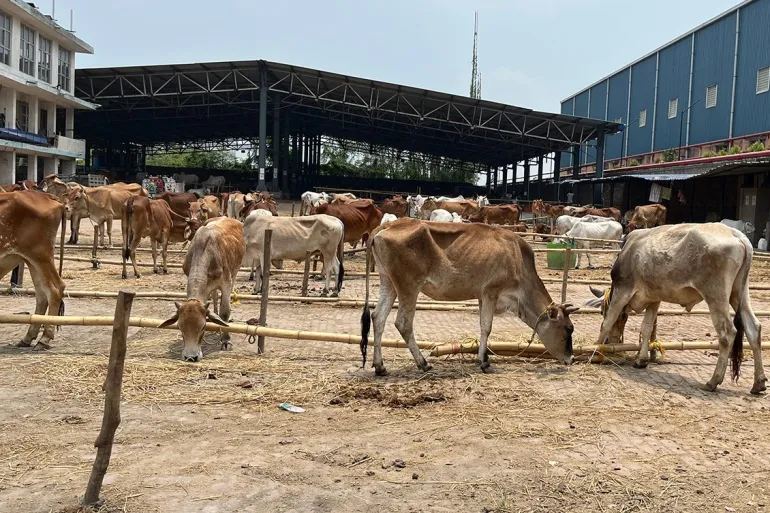
As Eid al-Adha approaches, a chilling atmosphere blankets the Dhulagarh cattle market near Kolkata, India. Just days away from the celebration, the market, typically bustling with activity, now resembles a ghost town. Traders huddle under makeshift shelters, their animals tied up and exposed to the relentless summer sun, while the sounds of commerce remain eerily absent. With more than 200 cattle waiting for buyers, the stark reality sets in — fear has driven customers away.
Traders are voicing their concerns about the drastic drop in sales this year. One seller from East Midnapur district, who requested anonymity due to fears of government backlash, lamented, "Who will buy a cow? People are living in fear." This somber sentiment resonates deeply in a state that boasts a significant Muslim population, with nearly 25 million residents — approximately 27% of West Bengal’s populace. Traditionally, this time of year would see a surge in business, with families pooling resources for the ritualistic sacrifice that marks Eid. Yet, the atmosphere has shifted dramatically in the wake of political changes in the state.
The roots of this tension can be traced back to the recent electoral victory of the Bharatiya Janata Party (BJP) in West Bengal, marking a significant shift in the political landscape. For decades, the state had been governed by leftist and centrist parties that fostered a culture of inclusivity regarding the region's diverse traditions. However, the BJP's ascendance to power on May 6, under Prime Minister Narendra Modi, has raised alarms among many. Just one week later, the newly appointed Chief Minister Suvendu Adhikari mandated the strict enforcement of laws that restrict cattle slaughter, a move that threatens to upend longstanding practices surrounding Eid celebrations.
The consequences of this upheaval extend far beyond just the cattle market. Local traders and communities are grappling with the repercussions of a climate of fear, as some express concerns over potential government reprisals. Local officials and community leaders worry that the shift in power dynamics could lead to further marginalization of the state’s Muslim population. As Eid approaches, families that once eagerly anticipated this festive occasion now face uncertainty, with many fearing the implications of their cultural practices in light of the new political reality.
Looking ahead, observers are keen to see how this situation unfolds as Eid al-Adha draws near. Will traders find a way to overcome the fear and adapt to the new political climate? As tensions simmer, all eyes will be on the government’s next moves and the impact on the state's diverse communities. The future of Eid celebrations in West Bengal hangs in the balance, and the world is watching closely.