
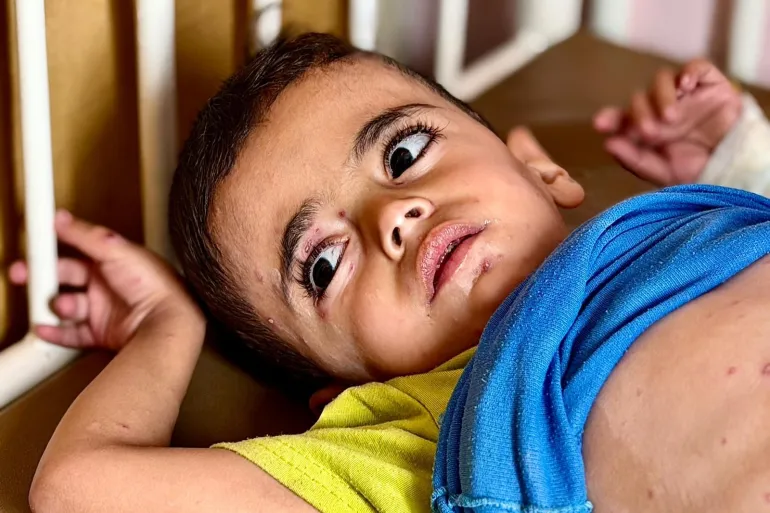
In the heart of Khan Younis, six-year-old Yasser Arafat lies frail and vulnerable in Nasser Hospital, his body marred by painful rashes and unexplained lesions. His mother, Iman Abu Jame, watches helplessly as her son battles illness exacerbated by dire living conditions. This tragic scene unfolds against the backdrop of a relentless humanitarian crisis in Gaza, where overcrowded camps and food shortages plague thousands of families struggling to survive. With healthcare services crumbling, the impact on children like Yasser becomes increasingly devastating.
The situation for Yasser and his mother reflects a broader catastrophe facing Gaza’s youth. In one of the most densely populated regions on Earth, families like theirs live in cramped tents surrounded by filth and contaminated water. "We have nothing to give him, not even basic meals or medicine," Iman lamented. Reports indicate that the number of children suffering from similar skin conditions is rising sharply, as doctors grapple with diagnosing and treating these ailments. With insufficient humanitarian aid entering the region, the consequences of prolonged conflict become even clearer.
This crisis is not born of chance; it has roots in an ongoing conflict that has escalated over more than two years. Israel's stringent restrictions on humanitarian supplies have worsened living conditions, which were already dire after years of conflict. Iman reflects on the stark transition from her son’s previous good health to his current frail state, attributing it to months of food shortages and skyrocketing prices that cripple families. The cycle of malnutrition leading to disease is painfully evident in the hospital corridors, where Yasser's plight mirrors that of countless other children.
The implications of this deteriorating situation extend far beyond individual families. Public health officials warn that if conditions do not improve, the outbreak of infectious diseases could spiral out of control, posing a significant threat not just to Gaza but potentially to neighboring regions as well. Community leaders express alarm at the rapid spread of infections among children already weakened by hunger. Iman’s sorrowful words resonate with many: "We are all suffering. This is catastrophic for everyone here." The need for immediate international intervention has never been more urgent.
Looking ahead, the international community must pay close attention to the unfolding disaster in Gaza. With winter approaching, the risks of further disease outbreaks loom large as overcrowding continues and humanitarian aid remains restricted. Yasser’s story is just one of many, but it is a dire call to action. The world must respond to alleviate this suffering and ensure that the children of Gaza receive the care and support they so desperately need.