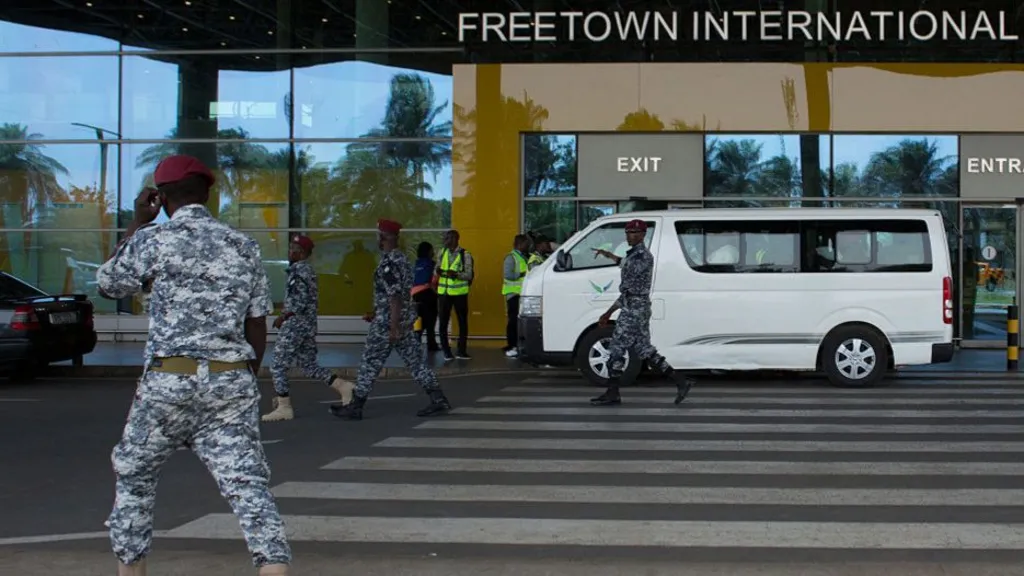
Sierra Leone faced a poignant moment as it became the latest African nation to accept deportees from the United States. Early Wednesday morning, a plane carrying nine West African migrants touched down at Freetown International Airport. This significant event unfolded amid President Donald Trump's aggressive crackdown on illegal immigration, which has accelerated deportations to various countries. The sight of the deportees disembarking, some visibly distressed, starkly illustrated the human cost of these policies.
Among the nine deportees were seven men and two women, all seemingly forlorn as they exited the Boeing charter flight. The group included five individuals from Ghana, two from Guinea, and one each from Nigeria and Senegal. Their arrival comes on the heels of an agreement announced by Sierra Leone's Foreign Minister Timothy Musa Kabba, who stated that the country would accept up to 300 deportees annually, provided they hail from Economic Community of West African States (ECOWAS) member states. This stipulation aims to manage the flow of deportees while maintaining a semblance of regional solidarity.
The backdrop to this situation is the Trump administration's controversial immigration strategies, which have led to the mass deportation of migrants from various nations, including those who have never set foot in the countries to which they are sent. Since taking office, Trump has focused on implementing strict immigration policies, framing deportations as a critical element of his re-election campaign. Sierra Leone is now part of a growing list of African countries, including Ghana and the Democratic Republic of Congo, that have accepted such deportees, raising questions about the broader implications for humanitarian standards.
The arrival of these deportees has stirred mixed reactions within Sierra Leone and beyond. Critics argue that the practice of deporting individuals to third countries violates international human rights standards, placing vulnerable migrants at further risk. Human Rights Watch has condemned these actions, urging African nations to reject what they term "opaque deals" that exploit human suffering. Local authorities in Sierra Leone have yet to clarify what benefits, if any, the country receives for accepting these deportees, leaving many to question the ethical implications of such agreements.
Looking forward, observers will be keen to see how Sierra Leone manages the integration of these deportees. The private company Kenvah Solutions, responsible for housing them, has stated that the migrants will only be permitted to stay in their facilities for two weeks before being returned to their countries of origin. This raises further concerns about the treatment and support offered to these individuals during a vulnerable transition. As the international community watches, the situation in Sierra Leone may serve as a bellwether for how African nations respond to the continuing fallout from aggressive immigration policies in the United States.