
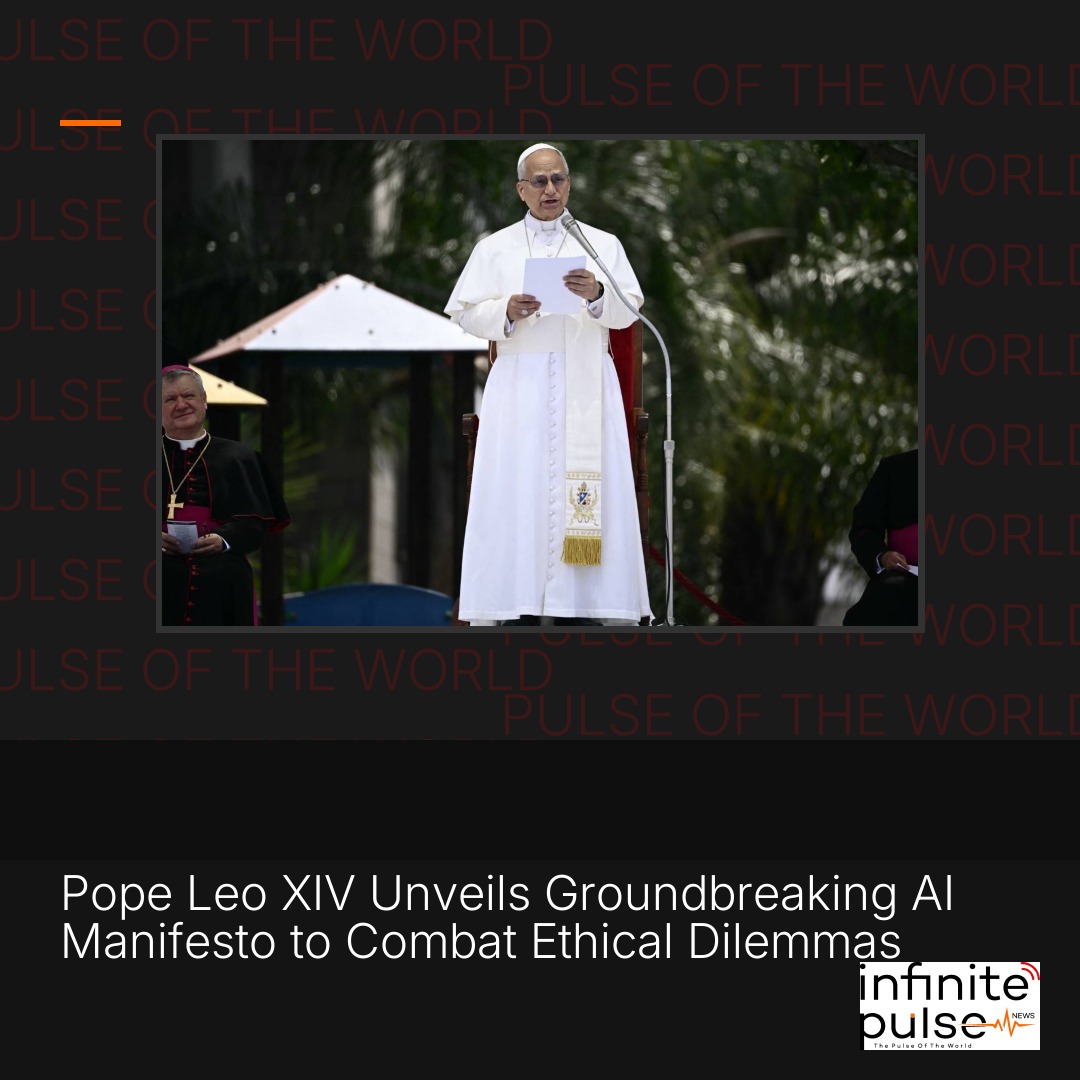
Pope Leo XIV is set to unveil his highly anticipated manifesto on artificial intelligence (AI) this Monday at the Vatican, marking a significant moment in the intersection of faith and technology. Titled "Magnifica Humanitas" (Magnificent Humanity), this encyclical aims to confront the ethical and social challenges posed by the rapid advancements in AI. The Pope will personally attend the presentation, a first for the Catholic Church, alongside key figures such as experts from the tech industry, including the co-founder of the AI startup Anthropic, which is currently embroiled in a legal battle over military applications of AI.
In his preparations for this landmark event, Pope Leo XIV has expressed deep concerns about the militarization of AI, warning against the dangerous trend of allowing machines to make life-and-death decisions. "Delegating decisions concerning the life and death of human beings to machines is a destructive spiral," the Pope stated, reflecting his commitment to ethical considerations in technology. Since his election as the Church's first US Pope a year ago, he has consistently highlighted the potential dangers of AI, such as the risk of reality being overshadowed by artificial simulations and the environmental destruction caused by the race for rare earth elements needed for modern electronics.
This manifesto emerges at a time when the economic impact of AI is becoming increasingly pronounced, with projections suggesting the sector could be worth up to $4.8 trillion by 2033. The United Nations has warned that this boom could lead to wealth being concentrated in the hands of a few, raising important questions about equity and access in AI development. UN Secretary-General Antonio Guterres has emphasized the urgency of shaping AI for the benefit of humanity, stressing that "the window is closing" to ensure its alignment with peace and justice.
The Vatican views "Magnifica Humanitas" as a pivotal extension of its teachings on social justice, drawing parallels to Pope Francis's influential 2015 climate encyclical, "Laudato Si". Experts believe the new document could spark similar global discussions about the responsibilities that come with technological advancement. Signed on May 15, coinciding with the 135th anniversary of Leo XIII's encyclical that addressed social issues during the Industrial Revolution, the Pope's message resonates with current debates about the ethical use of technology in society.
As the world watches the release of this manifesto, attention will shift toward the broader implications for the Catholic Church's role in shaping conversations around technology. Readers should look out for reactions from global leaders, tech experts, and the general public as they engage with the ideas presented in "Magnifica Humanitas". This document promises to be a crucial touchstone in the ongoing dialogue on how humanity reconciles rapid technological progress with ethical responsibility.