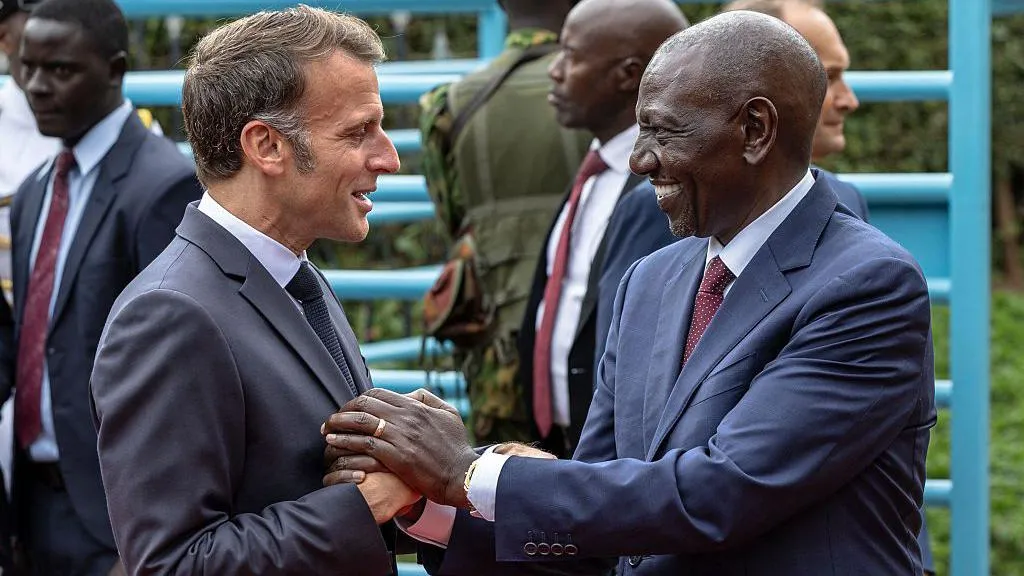
In a groundbreaking shift, French President Emmanuel Macron arrived in Kenya to co-host the Africa Forward Summit, engaging with over 30 African leaders in a bid to redefine France's historically fraught relationships on the continent. This unprecedented summit, taking place in the heart of Nairobi, marks the first time France has chosen an English-speaking nation to host such discussions, signaling a desire to break free from its colonial past. As tensions simmer over accusations of neo-colonialism, Macron's visit comes at a pivotal moment for both France and Africa.
During the two-day summit, Macron emphasized a vision of 'co-investment' and 'equal footing partnerships,’ addressing shared challenges that have long defined Franco-African relations, such as security and economic dependence. "Africa is succeeding. It's the youngest continent in the world… and needs investment to become more self-reliant," he declared, announcing a staggering investment of $27 billion aimed at sectors critical to both African and French interests, including energy, digital technology, and agriculture. This ambitious plan is expected to create approximately 250,000 jobs across the continent and in France, illustrating the mutual benefits of a rejuvenated partnership.
Historically, France has maintained close ties with its former colonies since their independence in the 1960s, often leading to accusations of continued dominance and exploitation. Over the decades, French presidents have hosted summits, typically held in French-speaking nations, reinforcing perceptions of a colonial hangover. However, the shift to Kenya marks a significant departure, with experts noting a growing desire among a new generation of African leaders to move beyond colonial legacies. Political analyst Gilles Yabi highlighted this sentiment, stating, "There's a new generation of Africans who want to turn the page on colonialism and post-colonial influence."
The implications of this summit are profound. African leaders, including Kenya's President William Ruto, expressed a unified call for the continent to assert its role in shaping the global order rather than remain marginalized. Ruto emphasized the importance of Africa speaking with one voice, underscoring a collective push for self-determination in international affairs. The summit's outcomes will likely influence not only Franco-African relations but also set a precedent for how global powers engage with the continent moving forward.
As the summit concludes, observers eagerly await the tangible results of Macron's promises. The commitment to invest in Africa’s future, coupled with the challenge to traditional narratives, could pave the way for a new era in international relations. Readers should keep an eye on the developments stemming from this summit, as both France and African nations navigate a complex landscape of cooperation and transformation, potentially reshaping the geopolitical dynamics for years to come.